How We Built a Smart Sports Equipment Locker
Part 3: Installation and First Results
In the first post of this series, we showed how the locker's metal enclosure was manufactured. In the second post, we integrated the electronics, access control system, and cloud connectivity. Now the smart sports equipment locker is finally ready for deployment.
Getting Ready
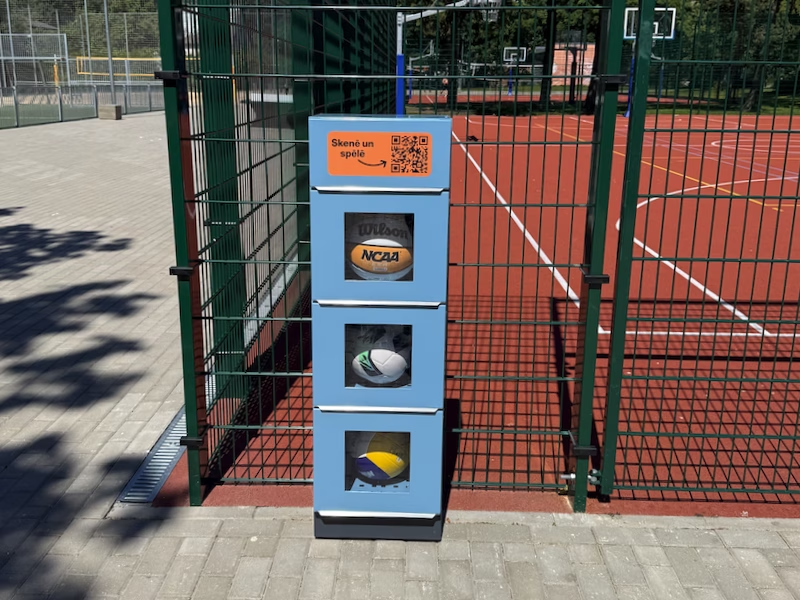
Before installation, we first needed to equip the locker with sports equipment. The first installation location is Rīgas Dārzciema Secondary School in Riga, Latvia. The school has recently built a modern multi-purpose sports complex with football, basketball, and volleyball courts, making it an ideal location for a free sports equipment locker.
The school has football, basketball, and volleyball fields, so we wanted to make sure students could access equipment for all three sports. Our three-compartment locker was therefore equipped with:
- Footballs
- Basketballs
- Volleyballs.
Installation
Choosing the installation location turned out to be just as important as building the locker itself. Based on discussions with industry experts, we've learned that locker placement has a significant impact on usage. There have been cases where lockers had very low activity simply because they were installed in less visible areas. After relocating them closer to the main entrance or the natural flow of people, usage increased dramatically. For this reason, we selected a location that is highly visible and directly next to the sports fields where students naturally gather.
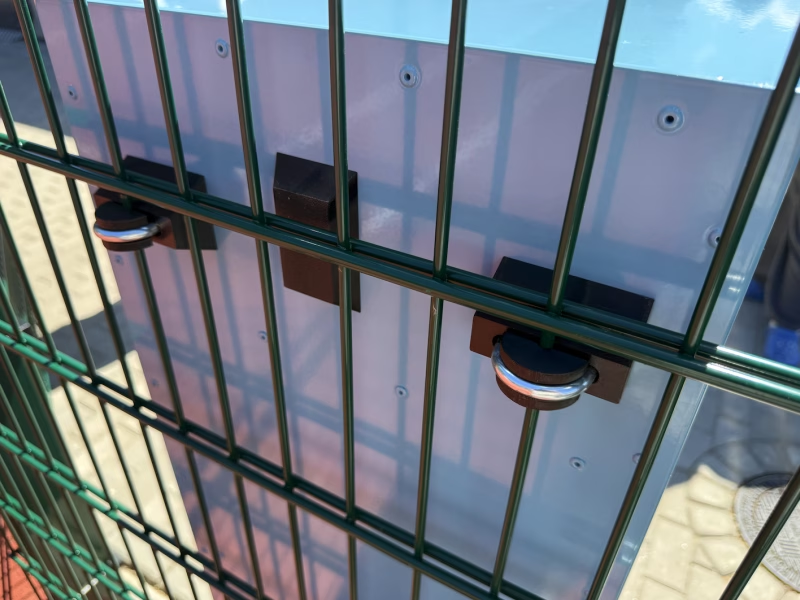
Our locker supports both wall mounting and ground mounting. Whenever possible, we prefer mounting the locker to an existing fence or post because it avoids unnecessary construction work. For this installation, we mounted the locker directly to the fence using two U-bolts with spacers. This approach avoids drilling into existing infrastructure while still providing a secure installation.
One design consideration was the LTE antenna, which is currently mounted on the rear of the locker. We used thicker spacers to provide enough clearance between the locker and the fence so the antenna would not be obstructed. This installation also highlighted a possible improvement for future versions. Relocating the antenna to the side or top of the enclosure would make installation easier and provide greater flexibility when mounting the locker in different environments.
First Results
The locker has now been operating for more than one month, and we are very happy with the first results.
During this period:
- More than 200 users registered in the mobile application.
- The locker has been used every day.
- Peak occupancy reached approximately 60%, meaning at least one of the three balls was rented for around 60% of the day.
- Average daily occupancy has been around 40%.
- Approximately 60% of users returned and borrowed sports equipment multiple times.
The returning user rate is perhaps the most encouraging metric. It shows that people are not simply trying the service once out of curiosity they are incorporating it into their regular sports activities.
Beyond the numbers, the project supports a broader goal: making sports more accessible. By removing the barrier of owning sports equipment, more people can spontaneously play a game of football, basketball, or volleyball. Better access to equipment encourages physical activity, helps communities make better use of existing sports facilities, and increases the value of public investments in sports infrastructure.
What's Next?
The success of our first pilot has given us the confidence to expand. We have already confirmed four additional locker locations across two municipalities in Latvia. These lockers are currently in manufacturing and will be installed during this sports season.
The goal is to collect enough operational data throughout the remainder of the season to refine both the hardware and the software. During the winter, we will use these insights to prepare for a significantly larger rollout next season and continue building a nationwide network of free smart sports equipment lockers across Latvia.
This project has demonstrated that combining connected hardware with simple access control can make public sports equipment more accessible while keeping operating costs low. We are excited to see how the network grows over the coming year.